
A hot tub, also called a spa, is a self-contained unit that keeps water heated and filtered for ongoing multi-person use. It is sometimes known as jacuzzi, a brand name that has become a common generic term for this type of product. A whirlpool bath is an indoor jetted bathtub filled and drained for each personal session. Both use water jets. Their design, heating systems, capacity and ownership routines differ substantially. This article compares the two across purpose, installation, water management, hydrotherapy features and long-term maintenance so the distinctions become clear.
Key Differences at a Glance
|
Aspect |
Hot Tub (Spa) |
Whirlpool Bath |
|
Primary Purpose |
Relaxation, social soaking, full-body hydrotherapy |
Personal bathing with short jet massage |
|
Installation Location |
Typically outdoors (patio, deck, garden); some indoor spa rooms |
Indoors, integrated into bathroom plumbing |
|
Water Storage |
Stays filled for weeks or months; same water reused |
Filled for each session and fully drained afterward |
|
Heating |
Dedicated electric heater maintains set temperature continuously |
Relies on home hot-water supply; limited or no reheating once filled |
|
Circulation & Filtration |
Continuous circulation pump + filter loop keeps water clean |
No continuous filtration; water is used once then discarded |
|
Sanitation |
Chemical balancing (pH, sanitizer) required on a regular schedule |
Minimal chemistry; periodic jet-line flushing recommended |
|
Capacity |
Usually 2–8+ persons with contoured seats and loungers |
Typically 1–2 persons, bathtub form factor |
|
Maintenance Focus |
Water chemistry, filter care, cover use, periodic full drain |
Jet plumbing cleaning after use; standard bathtub upkeep |
Water Circulation and Heating Systems
The most structural difference lies in how each product manages heat and water movement. A hot tub incorporates a dedicated electric heater, typically rated 2–3 kW for residential models, governed by a thermostat that holds a set temperature of 37–40 °C. A low-power circulation pump continuously or periodically moves water through the filter and heater circuit, while higher-powered jet pumps engage only when massage is selected. The same body of water remains in the vessel, supported by continuous filtration and chemical balancing. Thermal covers and multi-layer insulation limit heat loss so the heater cycles less often, allowing the unit to stay ready year-round.
A whirlpool bath operates without an independent long-term heating system. Temperature depends entirely on the home’s hot-water supply. Once filled, the water cools according to ambient conditions and surface area. Some models include a modest in-line heater that slows cooling during a single session. The architecture still anticipates complete drainage after use. No continuous filtration loop or chemical-management system is present.
These contrasting approaches produce different energy profiles and readiness patterns. A well-insulated outdoor spa maintains temperature with modest daily energy draw under a closed cover. A whirlpool draws a full volume of heated water for every session. Technical discussion of insulation and system efficiency appears in resources on energy-efficient hot tub technologies.
Massage Experience and Hydrotherapy Features
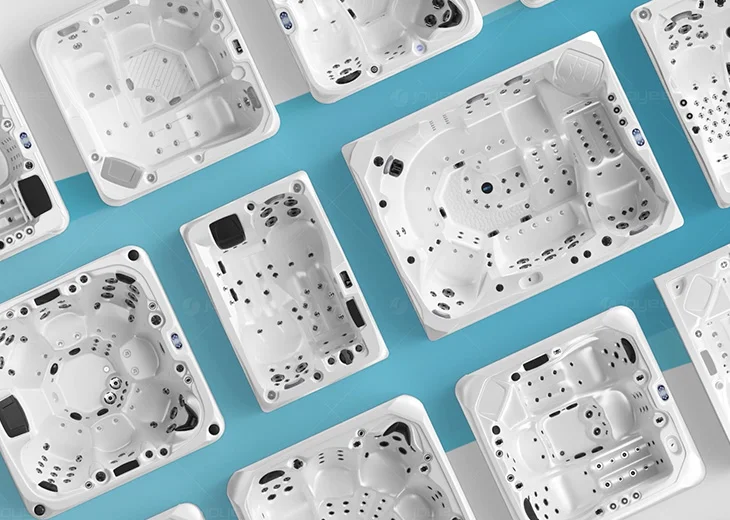
Hydrotherapy capability diverges in both scale and targeting. Hot tubs typically carry dozens of jets—frequently more than fifty and in some models exceeding one hundred—arranged to address the neck, shoulders, back, legs and feet. Contoured seats and loungers position the body so jets align with muscle groups. Multiple pumps enable independent zone control, allowing intensity and focus to be adjusted across different seating positions.
Whirlpool baths generally provide fewer jets, commonly four to twelve, located along the sides or at the feet of a conventional bathtub form. The resulting massage is firm and suitable for brief therapeutic sessions. Limited seating geometry and jet count constrain the range of hydrotherapy options relative to a full-size spa.
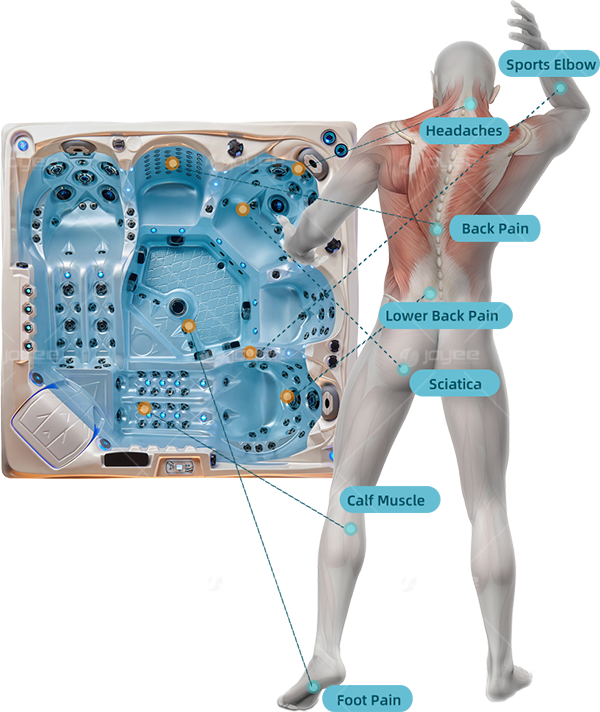
Precision jet placement supports targeted hydrotherapy across multiple seating positions.
Session characteristics follow from these design choices. A hot tub remains filled and heated, so immersion can continue without temperature decline. Contoured seating and adjustable jet strength accommodate both deep tissue work and gentle circulation. Whirlpool sessions remain shorter, constrained by cooling water and the expectation of drainage afterward.
Maintenance, Water Usage, and Long-Term Ownership
Ownership demands reflect the underlying water-management models. A hot tub requires ongoing attention to water chemistry. pH, alkalinity and sanitizer levels are monitored and adjusted on a regular schedule. Filters undergo periodic cleaning or replacement, and the vessel is drained and refilled every few months according to usage intensity. The same water supports many sessions, and the unit remains ready between uses.
A whirlpool bath centers on jet-line hygiene. Residual water can remain in the plumbing after drainage, making thorough flushing necessary to limit residue buildup. Cleaning cycles with approved solutions form part of routine care. Because fresh water is used each time, chemical balancing remains minimal. Cumulative water volume and jet-line maintenance still constitute measurable ownership factors.
Installation footprints also differ. An outdoor spa rests on a level, load-bearing surface, requires dedicated electrical circuits and needs clearance for the cover and equipment access. Service panels in the cabinet provide reach to pumps and heaters. A whirlpool bath is integrated during bathroom construction or renovation and relies on standard plumbing access panels.
Cost categories therefore diverge. Spa ownership encompasses chemicals, filter cartridges, electricity for heating and filtration, and occasional professional service. Bathroom jetted-tub ownership centers on cleaning agents and the higher volume of heated water drawn from the domestic system. Site preparation and ownership context are outlined in the hot tub installation guide.
Choosing the Right Option for Your Needs
The practical distinction emerges when equipment is matched to space and intended use. A private bathroom with limited floor area and a preference for short, personal soaks aligns with a whirlpool bath. An outdoor patio, deck or wellness area intended for family use, entertaining or extended hydrotherapy aligns with a hot tub.
Commercial and hospitality settings follow the same pattern. Guest rooms or compact suites often favor an indoor jetted bath. Pool decks, rooftop terraces, resort courtyards and villa gardens typically favor self-contained outdoor spas that remain ready throughout the day.
When continuous heating, multi-person seating and deeper hydrotherapy are central to the requirement, the outdoor hot tub category offers the broader functional range. Selection within that category then focuses on capacity, jet count, insulation performance, control system and cabinet design.
JOYEE manufactures a full range of outdoor hot tubs and swim spas for residential, hospitality and wholesale partners. The portfolio covers compact two-person units through larger social and therapy models, with options for OEM and ODM customization. Technical details, seating configurations and project references are available on the JOYEE product pages.
For project-specific configurations, capacity planning or OEM cooperation, contact the JOYEE team to discuss requirements and available options.