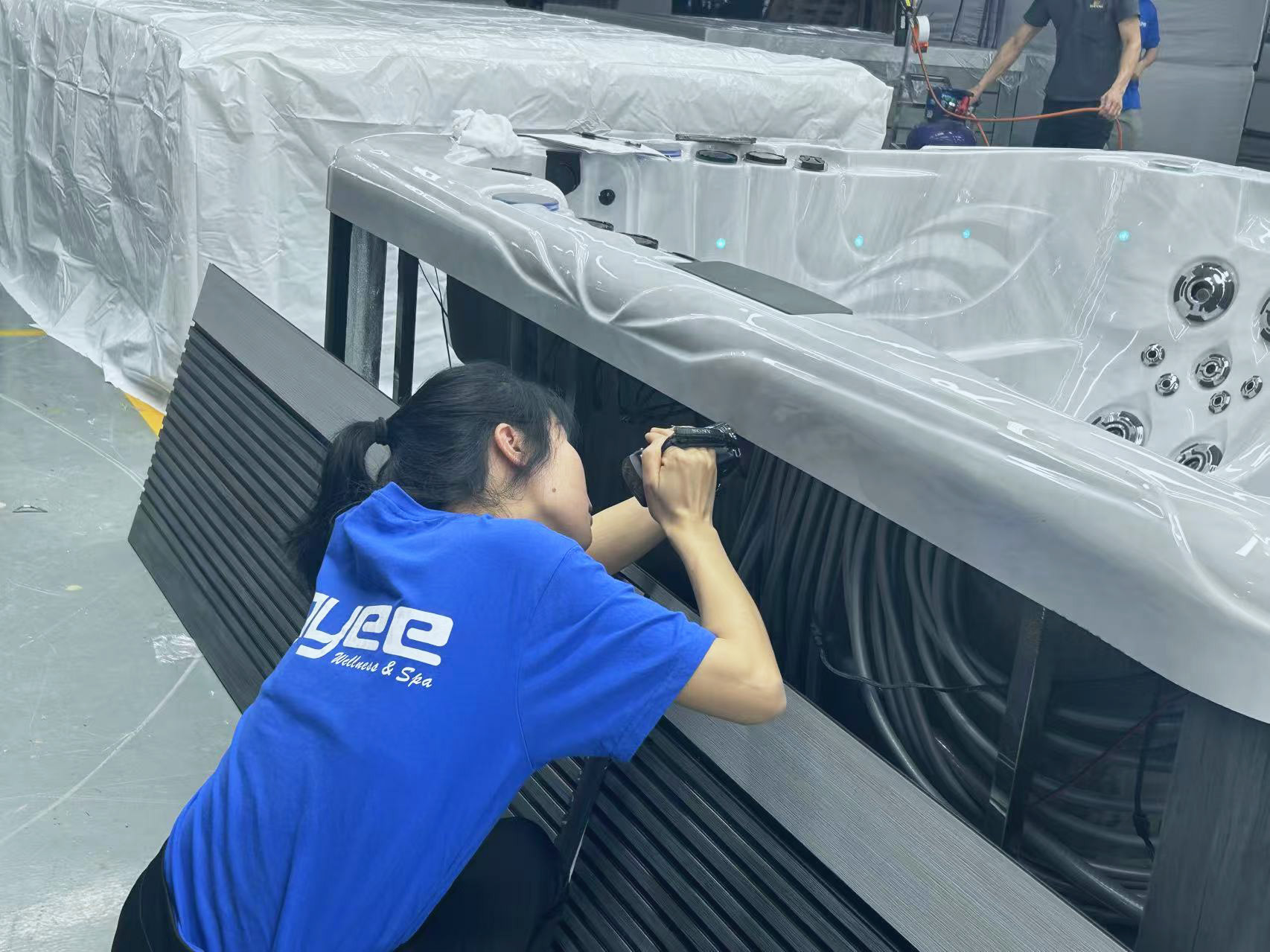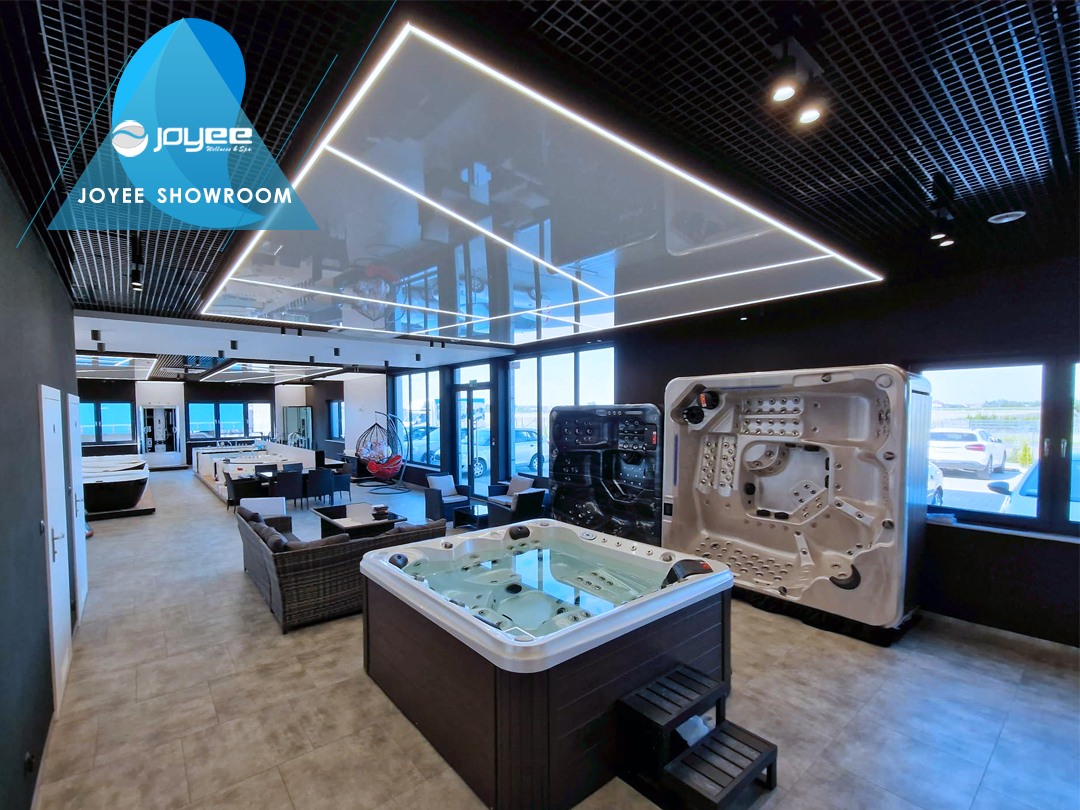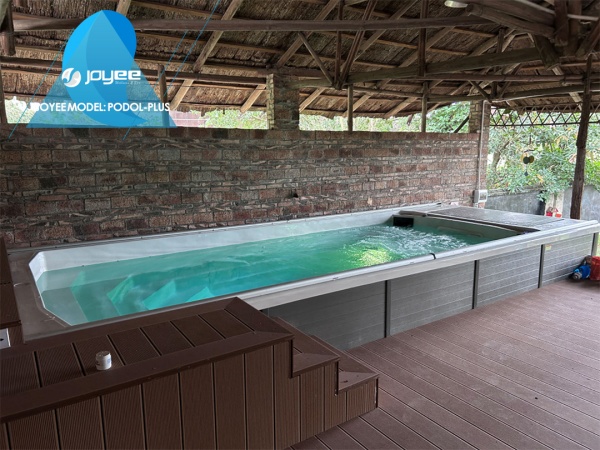

Hot tub jets form the core of the hydrotherapy experience. More than simple water outlets, these components direct pressure, mix air, and create distinct massage patterns that reach different muscle groups. Understanding how jets operate helps buyers evaluate a spa beyond jet count alone. This guide explores the mechanics of jet systems, the main jet categories, and how thoughtful design turns water flow into targeted relaxation. It also shows how manufacturers such as JOYEE approach jet materials, seating layouts, and custom configurations for residential and commercial projects.
How Do Hot Tub Jets Work and Shape Hydrotherapy?
A jet receives pressurized water from a dedicated pump and releases it through a nozzle into the spa shell. Many designs also draw in air through a venturi effect, producing a softer, aerated stream. The resulting flow can feel firm and focused or broad and enveloping, depending on nozzle shape, air volume, and the angle of the outlet. When these elements align with seating contours, the system delivers hydrotherapy that supports recovery and general comfort.
Water Flow, Air Mixing and Jet Performance
Pump capacity sets the foundation for consistent pressure across the plumbing network. A balanced system distributes flow so each jet maintains its intended intensity. Air mixing adjusts the feel of the stream. Higher air content creates a lighter, bubbly sensation preferred for longer sessions, while reduced air produces a denser massage. Jet faces often allow users to fine-tune direction or open and close individual outlets. Reliable performance depends on clean filters, properly sized plumbing, and pumps matched to the total jet load. Examining the complete water circuit offers clearer insight than counting nozzles alone. Resources such as the hot tub buying guide expand on these system-level considerations.
Jet Placement for Different Body Areas
Placement determines which muscle groups receive attention. Lumbar and mid-back zones benefit from jets positioned at the lower curve of the seat. Shoulder and neck areas call for higher outlets, sometimes paired with adjustable pillows. Calf and foot jets address lower-leg tension common after standing or walking. A lounge position may feature a sequence of jets along the full length of the body. When seats and nozzles are designed together, users can move between positions and still find effective coverage. This coordinated approach appears across many outdoor hot tub models intended for daily wellness use.
Effective Jet System
An effective system balances quantity, type, and location. Too many jets without adequate pump power can reduce pressure at each outlet. A smaller number of well-aimed nozzles can produce satisfying results when flow and seating align. Zoning allows different seats to operate independently or at varied intensities. Quiet plumbing and vibration control further improve the overall session. Buyers evaluating options for hospitality or residential projects often look for this integrated design rather than isolated specifications.
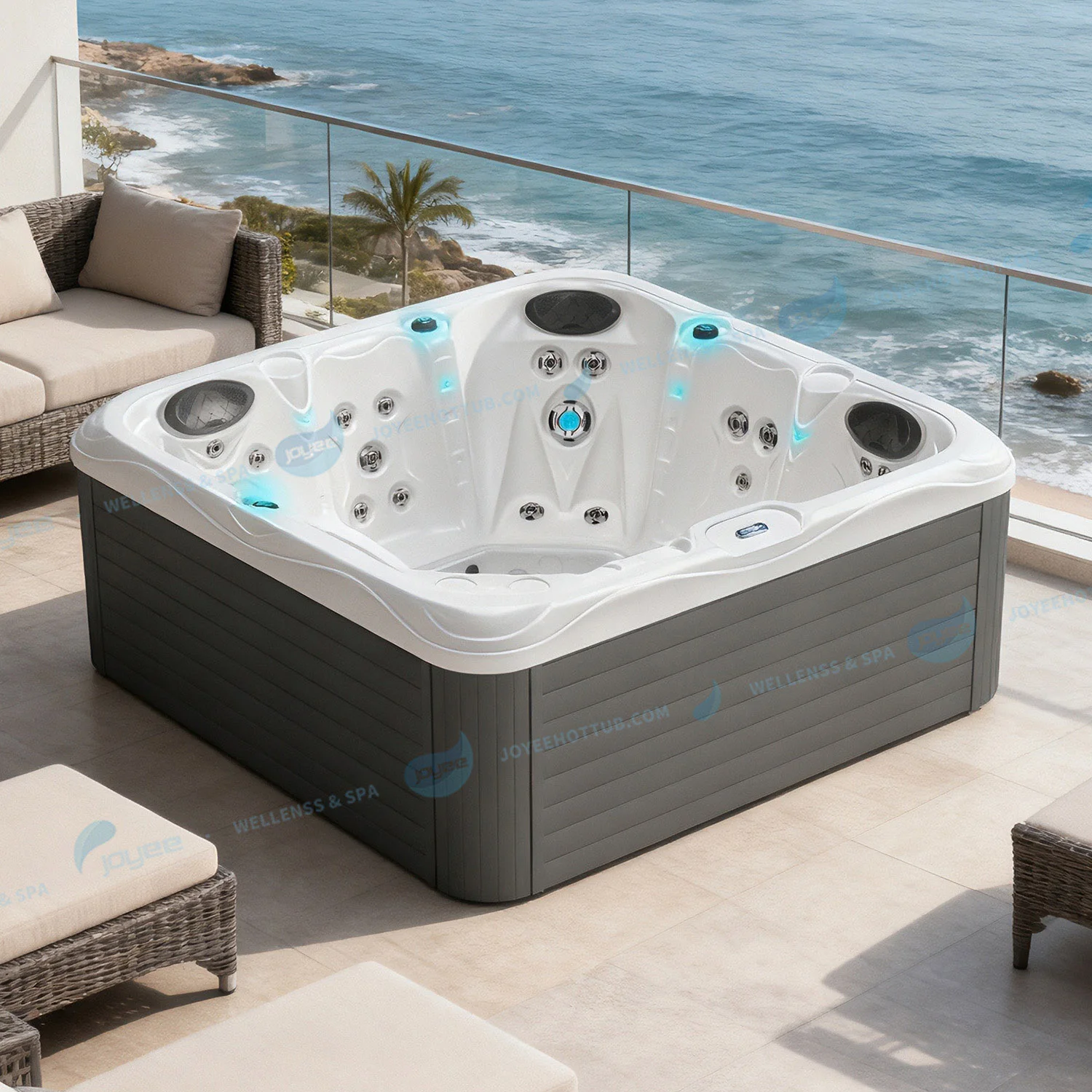
A well-planned jet layout places outlets at key body zones for balanced hydrotherapy.
Four Types of Hot Tub Jets and Their Hydrotherapy Experience
Different nozzle designs create distinct water patterns and sensations. Most spas combine several types so each seat can offer a varied massage. The four categories below cover the majority of configurations found in modern outdoor spas.
Rotary Jets
Rotary jets spin as water exits, producing a circular, kneading motion. The rotating stream moves across a wider surface than a fixed nozzle, making these jets popular for the back and shoulders. The continuous change in contact point helps reduce the sense of pressure remaining on one spot for too long. Many users describe the effect as similar to a circular hand massage. Rotary designs appear frequently in therapy-oriented seating where prolonged sessions are expected.
Directional Jets
Directional jets deliver a straight, focused stream. Users can often rotate the face to aim the flow at a specific point, such as a tight spot in the lower back or the arch of the foot. The concentrated pressure suits targeted relief. Because the stream stays in one path, these nozzles pair well with adjustable seats that allow the body to press into the flow. In multi-seat layouts, directional jets commonly occupy positions that serve the spine and large muscle groups.
Cluster and Multi-Stream Jets
Cluster jets group several small outlets in one face, spreading water over a broader zone. Multi-stream designs achieve a similar result with parallel or angled channels. The sensation feels softer and more diffuse than a single directional stream. These nozzles suit the upper back, thighs, or seats intended for general relaxation. Combining them with rotary or directional types gives each seating position a layered experience. Further details on configuration options appear in discussions of OEM spa customization.
Air Jets and Bubble Systems
Air jets introduce a high volume of air with less water pressure, creating a gentle bubbling effect across the surface or along the body. Separate air blowers often power these systems. The light, continuous stimulation works well for full-body immersion and longer soaks. Some spas place air outlets in the footwell or along lounge seats to complement the stronger hydrotherapy jets. When combined with heated water, the bubbles enhance the sense of immersion without adding intense pressure.

Close-up of JOYEE spa nozzles showing different jet faces used in hydrotherapy systems.
JOYEE Custom Hot Tub Jets for Different Hydrotherapy Experiences
JOYEE develops jet systems as part of a complete hydrotherapy platform rather than isolated components. The approach starts with material selection and sealing technology, continues through plumbing layout, and finishes with seat geometry that places every outlet at a purposeful angle. This integrated method supports both catalog models and fully custom OEM and ODM projects for distributors and commercial partners.
Jet bodies use 316 stainless steel for corrosion resistance in high-temperature and chemically treated water. Dual sealing options address different climates. I-Ring seals handle expansion and contraction in arctic winters and intense heat, while O-Ring seals suit coastal humidity and tropical conditions. The climate-adaptive design reduces leak risk and related maintenance. Multiple jet styles and sizes allow a single spa to combine rotary, directional, and cluster faces according to the intended therapy zones.
Internal plumbing follows an optimized route that limits ninety-degree elbows. Fewer sharp bends preserve water pressure, deliver stronger flow from the same pump, and lower energy use. The layout stays organized for easier service access. On the seating side, Bio-Curve contours align the natural resting position of the back, shoulders, and legs with the jet outlets. Positions are not randomly drilled. Each nozzle location is mapped to common tension areas such as the lumbar region, shoulders, calves, and feet, creating defined hydrotherapy zones within the shell.

Customized hydrotherapy zones pair Bio-Curve seating with jet positions mapped to key muscle groups.
For OEM and ODM partners, jet counts, types, and locations can be adjusted to match market preferences or project briefs. A hospitality installation emphasizes even coverage across multiple seats, while a residential wellness model concentrates deeper therapy on lumbar and shoulder zones. Joyee with two decades of outdoor spa manufacturing experience informs the engineering from mold development through functional testing, resulting in systems that perform consistently in residential gardens, hotel terraces, and commercial wellness spaces.
Conclusion
Hot tub jets shape the hydrotherapy experience through water flow, air mixing, placement, and nozzle design. Rotary, directional, cluster, and air systems each contribute different sensations, and the most satisfying spas combine them thoughtfully with ergonomic seating.
JOYEE applies this system-level approach across its outdoor spa range and custom manufacturing services. Exploring current models and customization options offers a practical next step for residential, hospitality, or commercial installations. For further details on product ranges, jet configurations, and OEM capabilities, welcome to contact us.
FAQ
How many jets does a good hot tub need?
Jet quantity alone does not define performance. Placement, jet type, pump capacity, and seating design together determine how effectively the system reaches different body areas. A balanced layout with well-matched components often provides a more satisfying experience than a high count without corresponding flow.
Can jet configurations be customized for different markets?
Yes. Manufacturers with OEM and ODM capability can adjust jet types, quantities, and positions to suit specific seating layouts or therapy goals. This flexibility helps brands and project developers create products that match local preferences or application requirements.
What role does air play in jet performance?
Air mixing softens the water stream and adds a bubbly quality. Adjustable air controls let users change the sensation from firm and focused to lighter and more diffused, extending the range of available hydrotherapy effects within a single spa.
How does seating design relate to jet effectiveness?
Seats that follow body contours position the user so that key muscle groups rest against the jet outlets. When seating geometry and jet placement develop together, pressure reaches the intended zones more consistently across different body sizes.