
Choosing the right water temperature turns a hot tub into a reliable source of daily recovery and quiet enjoyment. The same decision also shapes how long the unit needs to reach that temperature, how much energy it draws, and how the equipment is engineered to keep heat in place. This guide walks through recommended temperature ranges, realistic heat-up timelines, the main variables that change those timelines, and the design choices that improve overall heating efficiency.
What Is the Ideal Hot Tub Temperature?
Most healthy adults find comfortable soaking between 100°F and 104°F (38°C to 40°C). Health authorities, including the CDC and the U.S. Consumer Product Safety Commission, set 104°F (40°C) as the upper safety limit. Water above that threshold raises the risk of overheating, especially during longer sessions or when alcohol is involved. A setting near 102°F often provides a practical balance of warmth and comfort while leaving a small margin below the ceiling.
Personal preference, time of day, and outdoor conditions all influence the final setting. Cooler evenings or a brisk wind often make a slightly higher temperature feel right, while a warm afternoon may call for a lower setting. Children, older adults, and anyone with certain medical conditions benefit from lower temperatures and shorter soaks. Pregnant individuals are advised to consult a healthcare provider before use, particularly in the first trimester. The ideal temperature is therefore the lowest comfortable point within the safe range that matches the user’s needs on a given day.
How Long Does a Hot Tub Take to Heat Up?
A typical hard-sided outdoor spa gains roughly 3°F to 6°F per hour under normal conditions. From a cold fill of about 55–60°F, reaching 100–104°F can take anywhere from 6 to 24 hours. Manufacturer guidance varies. Some 240-volt units complete the climb in 6–12 hours, while lower-powered 120-volt models or larger vessels may need a full day or longer. Once the spa is already near operating temperature, recovery after a short soak or a modest top-up usually finishes within one to three hours.
These ranges assume the cover stays closed, the heater runs continuously, and circulation is unobstructed. Real-world results shift with water volume, starting temperature, outside weather, and the quality of the thermal insulation system. Keeping the spa warm between uses remains more efficient than repeated cold starts, which is why maintaining the unit at set temperature is generally preferred over draining or fully cooling it.
Five Key Factors That Affect Hot Tub Heating Time
Several variables interact to determine how quickly water reaches the chosen temperature. Understanding each one helps set realistic expectations and guides decisions about equipment and daily habits.
Water Volume and Starting Temperature
Larger spas hold more water and therefore require more energy to raise the temperature by the same amount. A three-person model finishes heating sooner than a six- or seven-person unit under identical conditions. The starting temperature of the fill water also matters. Hose water at 50°F demands a longer climb than water that enters already at 70°F. Measuring the initial temperature and noting the spa’s gallon capacity gives a practical basis for estimating the wait.
Heater Capacity and Electrical Supply
Heater output, usually expressed in kilowatts, sets the maximum rate of heat transfer into the water. Common residential heaters range from about 1.5 kW to 6 kW or more. Units wired for 240 volts typically heat faster than plug-and-play 120-volt models because they can support higher continuous power. Matching heater size to water volume and expected climate keeps the system from running at full output for excessive periods.
Ambient Temperature and Weather Exposure
Cold air, wind, and precipitation pull heat away from the spa shell and cover. In freezing conditions the heater works against continuous losses, stretching the time needed to reach set point. Sheltered placement, windbreaks, and a tight-fitting insulated cover reduce that external load. Even in mild weather, a poorly sealed or worn cover can add hours to a cold start.
Insulation Quality and Construction
Full-foam or multi-layer insulation limits conductive and radiant heat loss through the shell, base, and cabinet. A well-engineered system maintains water temperature with less frequent heater cycling, which shortens recovery times after use and lowers overall energy demand. Buyers can give insulation equal weight with heater rating when evaluating energy efficiency in hot tub because the two elements work as a pair.
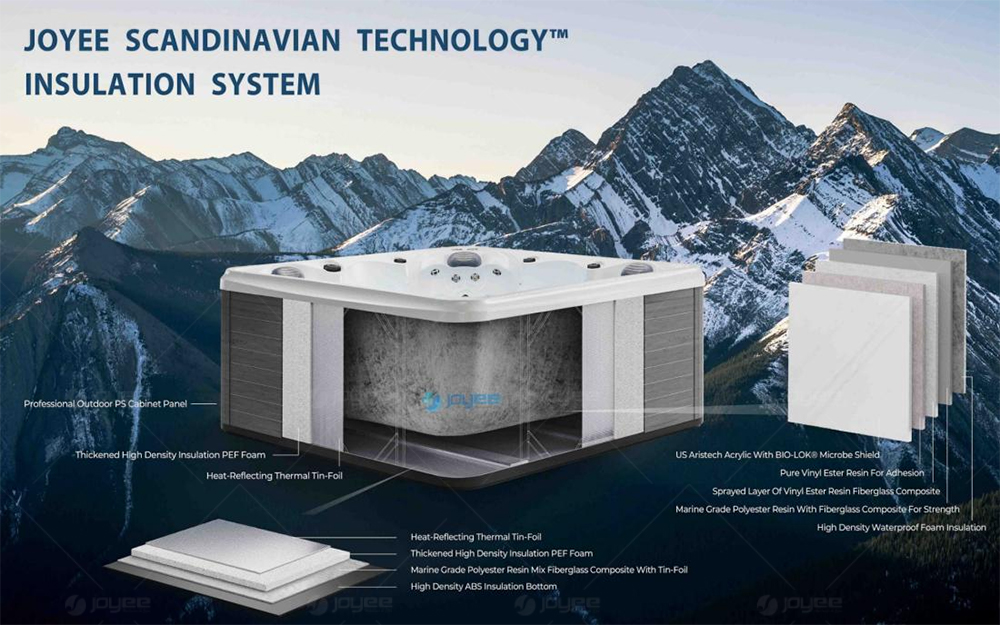
Joyee's Multi-layer insulation construction that supports faster heat retention and lower standby losses.
Cover Condition and Daily Habits
An insulated cover that seals tightly can cut heating time by a substantial margin by trapping rising heat. Leaving the cover off, even briefly, during the heat-up phase allows rapid surface cooling. Regular inspection of the cover’s foam core, vapor barrier, and straps keeps that thermal barrier intact. Simple habits such as closing the cover immediately after exiting and avoiding unnecessary lid openings also preserve the temperature already achieved.
Hot Tub Heating Efficiency Depends on Integrated Equipment Design
A hot tub's heating performance is shaped by the way its components work together. Heater capacity determines how much heat can be supplied, while insulation and structural design influence how effectively that heat is retained.
Heating system configuration is an important starting point. The heater's rated power should be considered alongside the spa's water capacity and intended operating conditions. JOYEE models have different configurations, so the heater specifications of each model can help buyers assess its suitability for a particular project or market.
Insulation structure also contributes to thermal performance. JOYEE's product range specifies insulation foam for the spa body and 25 mm high-density insulation foam for the skirt. These materials help reduce heat transfer through the spa structure, supporting better heat retention during operation.
Base protection is another part of the overall design. JOYEE uses a waterproof, insect-proof ABS base designed to help limit heat dissipation. The base forms part of the spa's lower enclosure, where structural protection and thermal considerations both matter.
Temperature control systems support convenient operation. JOYEE offers Balboa and Gecko control systems, which allow users to manage spa functions such as water temperature, pumps, and lighting. These systems make it easier to set and monitor operating conditions as part of everyday spa use.
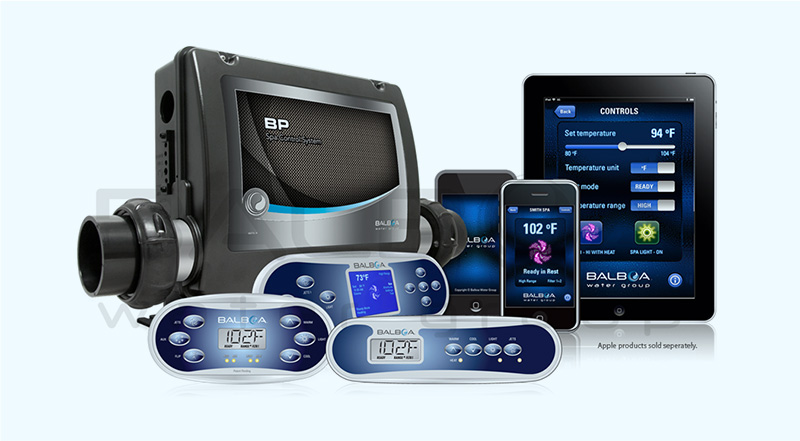
Joyee's Balboa and Gecko Control Systems
Conclusion
The right hot tub temperature supports a comfortable and safe soaking experience, while heating time depends on the spa's capacity, heater output, insulation, and operating environment. JOYEE offers a range of outdoor hot tubs with different heating systems, insulation structures, and control options to suit residential and commercial projects. Contact JOYEE to explore our hot tub solutions and discuss the right configuration for your market or project.