
The right hot tub model should fit the way it will be used, the available space, the desired hydrotherapy experience, and the practical requirements of installation and long-term ownership. Budget also needs to account for delivery, electrical work, energy use, maintenance, and service. This buying guide walks through the key decisions in a practical order, from defining your needs and selecting the right size to evaluating features, installation requirements, total cost, and supplier support.
Define Your Needs
The starting point for choosing a hot tub is its intended role. A spa designed for quiet personal relaxation may require a very different seating arrangement and feature.
How Will You Use It?
For personal relaxation, compact models with comfortable seating, targeted jets, and simple controls may provide a suitable experience. Hydrotherapy can place greater emphasis on hot tub jets, massage zones, water circulation, and ergonomic seating. The location and type of jets can influence how effectively the spa supports areas such as the back, shoulders, legs, and feet. For hotels, resorts, villas, and other projects, factors such as appearance, durability, operating efficiency, maintenance access, and integration with the surrounding space become more important. These requirements can also influence whether a standard model or a custom hot tub configuration is more appropriate.
How Many People Will Use It?
The stated seating capacity provides a useful starting point, but actual usage patterns are equally important. A four-person spa intended for regular family use may need a different layout from a four-person model primarily used by couples. It is also worth considering how often all seats will be occupied, whether lounge seating is preferred, and whether users have different heights or comfort requirements. These details help connect the nominal capacity with a more practical hot tub size and seating configuration.
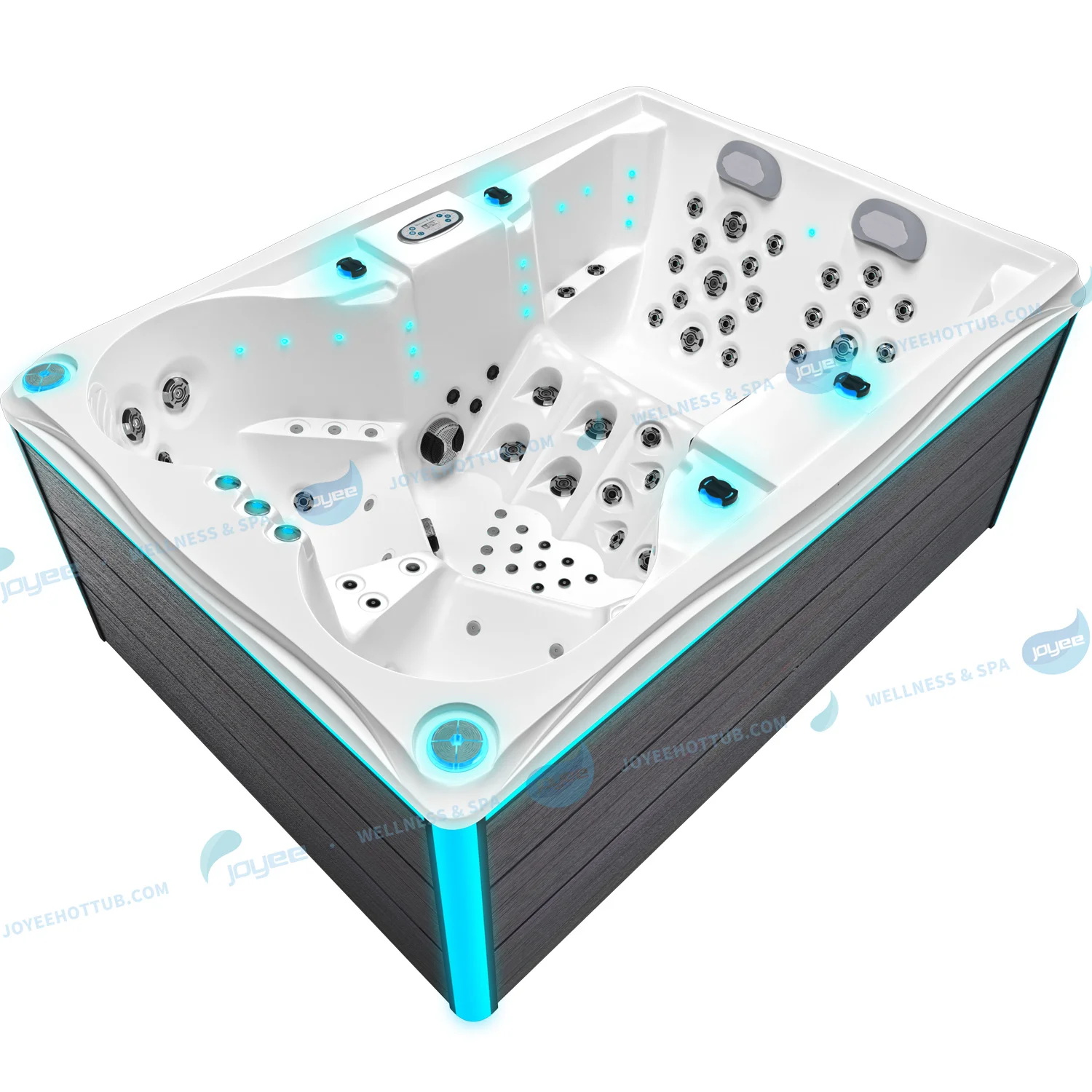
JOYEE Omaha hot tub for 4 persons provides a powerful and relaxing massage experience while making efficient use of space.
Choose the Right Size
A suitable hot tub size needs to accommodate users comfortably while leaving enough room for installation, movement, and future maintenance.
Match Size to Users
Hot tubs are commonly described by seating capacity, such as 2-person, 4-person, 6-person, or 8-person models. A couple who mainly uses the spa in the evening may find a compact model sufficient. A family or group that regularly uses the spa together may benefit from a larger configuration with more independent seating positions. For larger models, hot tub for 8 persons can be evaluated according to both seating arrangement and available space.
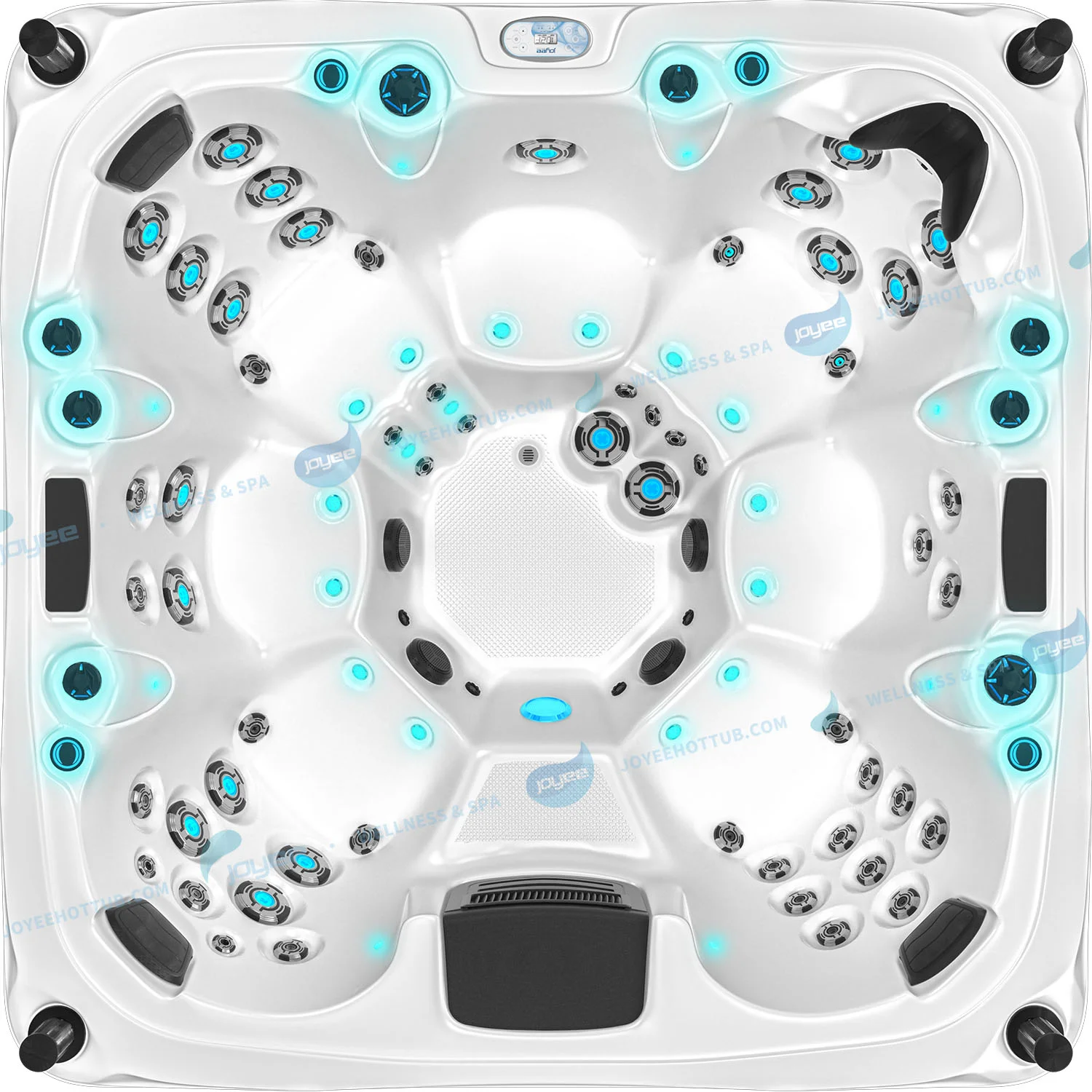
JOYEE Manu hot tub for 7-8 persons
Check Installation Space
The external dimensions of a hot tub should be checked against the installation area before a specific model is selected. Hot tub dimensions affect more than whether the shell physically fits. Space may also be needed around the unit for entry, cover operation, equipment access, and routine servicing. Comparing length, width, height, and surrounding clearance gives a more accurate picture of whether a model suits the intended location.
Consider Seating Layout
The best layout therefore depends on the relationship between capacity, available space, body positioning, and intended use. For example, a model with several upright seats may suit social use, while a configuration with dedicated lounge seating can place greater emphasis on relaxation. These factors are worth evaluating together when comparing different hot tub sizes.
Compare Hot Tub Types
Hot tubs are available in different configurations, and the most suitable type depends largely on the installation environment, construction requirements, and intended experience.
Portable or Built-In?
Portable hot tubs generally offer greater flexibility in placement and installation. They can work well for residential settings where the spa may need to remain accessible or where major structural modifications are undesirable. Built-in models can be incorporated more closely into decks, terraces, landscaping, or architectural spaces. They may provide a more integrated appearance, especially in high-end residential and commercial projects, while requiring more detailed planning for the structure, access, drainage, and equipment.
Indoor or Outdoor?
An outdoor hot tub is the more common choice for gardens, patios, terraces, and other exterior areas. The surrounding environment should be considered alongside the spa itself, including weather exposure, privacy, drainage, and access to electrical services. Indoor installations can provide greater protection from outdoor conditions and year-round accessibility. Ventilation, humidity control, floor drainage, and structural considerations become particularly important in an enclosed space.
Hot Tub or Swim Spa?
A hot tub is generally designed around seated hydrotherapy and relaxation, while a swim spa provides a larger water environment that can support swimming or exercise alongside spa functions. Comparing the factors such as available space, intended activity, water volume, installation requirements, and operating costs can help define the more suitable category.
Evaluate Hydrotherapy
Hydrotherapy performance depends on how water, jets, seating, and pump systems work together. When comparing models, the configuration of these elements can provide more useful information than a single specification such as total jet count.
Jet Placement
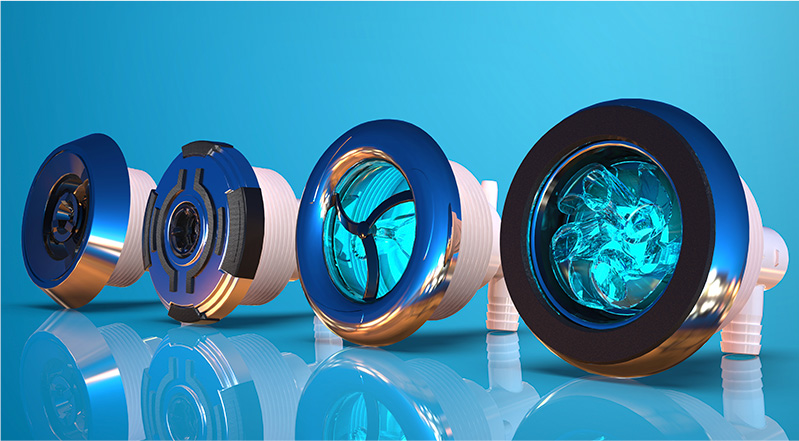
Jet positioning determines which areas of the body receive targeted water pressure. Back, shoulder, lumbar, calf, and foot areas may require different jet positions and angles. A well-planned configuration allows users to select different massage areas according to their preferences. This is particularly relevant for buyers looking for a hydrotherapy hot tub for regular wellness or relaxation.
Jet Types
Different hot tub jet types can create different sensations and water-flow patterns. Some are designed for focused pressure, while others distribute water across a wider area. Rotary and directional jets can also provide different massage effects. The ideal combination depends on the intended use and seating configuration. A model with a carefully selected jet layout can offer a more balanced experience across several seats.
Pump and Water Flow
The pump supplies the water flow that drives the hydrotherapy system. Its performance needs to be considered together with the number and configuration of jets, plumbing design, and water circulation. A larger number of jets can increase the system's demand for water flow.
Massage Zones
Different users may prefer different levels of massage intensity. Dedicated massage zones can provide more flexibility by directing water flow toward specific body areas or seating positions.
Prioritize Useful Features
Once size and hydrotherapy requirements are established, features can be assessed according to how they contribute to comfort, convenience, and long-term operation.
Comfort Features
Ergonomic seating, headrests, lighting, waterfalls, and carefully positioned controls can improve the overall experience. Seating depth is also relevant because users of different heights may have different preferences for body support and water level. Features should therefore be considered in relation to the people using the spa and the environment in which it will be installed.
Convenience Features
Modern hot tub features can simplify everyday operation. Easy-to-use controls, efficient filtration, water-care systems, and practical cover designs can reduce the effort involved in routine use. For residential users, convenient controls and straightforward maintenance can make a noticeable difference over time. Commercial applications may place greater emphasis on accessibility, durability, and simplified servicing.
Energy-Saving Features
Energy efficiency deserves attention because heating and circulation contribute to ongoing operating costs. Insulation, an effective thermal cover, efficient pumps, and appropriate water management can help reduce heat loss and energy consumption. When comparing an energy efficient hot tub, it is useful to consider the complete system instead of focusing on one component. Equipment efficiency, insulation quality, cover performance, and operating settings all influence long-term energy use.
Calculate the Total Cost
The listed price of a hot tub is only one part of the overall investment. A more useful budget includes the expenses associated with installation, delivery, energy consumption, water care, maintenance, and future service.
Purchase Price
The initial price varies according to size, construction, equipment, seating configuration, hydrotherapy system, and additional features. Comparing models at the same capacity can provide a more meaningful reference because specifications and included equipment may differ significantly. For those who research the average cost of a hot tub, it is useful to consider what is included in the quoted price, such as the cover, control system, filtration equipment, or other accessories.
Installation and Delivery
Installation expenses can include electrical work, foundation preparation, drainage, delivery, and site access. The location of the property and the complexity of moving the spa into position can also affect the final cost. A complete quotation should therefore be assessed against the expected hot tub installation requirements instead of the product price alone.
Running and Maintenance Costs
Ongoing expenses typically include electricity for heating and circulation, water treatment products, cleaning, filters, and replacement components. Energy consumption can vary with climate, water temperature, insulation, frequency of use, and equipment efficiency. Searches such as hot tub maintenance cost, hot tub running costs, and how much does it cost to heat a hot tub reflect an important part of the ownership decision. Understanding these recurring expenses can make it easier to compare products with different specifications.
Total Cost of Ownership
A practical way to estimate the overall investment is:
Total Cost = Purchase + Installation + Energy + Maintenance + Service
This approach provides a broader basis for evaluating value over the expected service life of the spa. A model with a higher initial specification may have different long-term expenses depending on its insulation, equipment efficiency, maintenance requirements, and component availability.
Check Installation Requirements
Installation conditions can influence which hot tub models are suitable for a particular property.
Electrical Supply
Voltage, circuit capacity, wiring, and local electrical standards should be reviewed with a qualified professional before installation. The manufacturer's technical specifications can provide the starting point for confirming the appropriate hot tub electrical requirements.
Foundation and Drainage
A hot tub requires a stable base capable of supporting the filled weight of the unit and its occupants. Concrete slabs, reinforced decks, and other suitable structures may be considered according to the site and local requirements. Drainage also deserves attention because water may need to be removed during cleaning, maintenance, or unexpected overflow.
Delivery Access
Doorways, gates, corridors, stairs, corners, and elevation changes can affect whether the selected model can reach its final position. For larger units, additional delivery equipment or specialized handling may be required. Confirming these hot tub delivery conditions in advance can reduce delays and unexpected delivery costs.
Maintenance Access
Access to pumps, controls, filtration systems, and other equipment should remain practical after installation. A visually integrated installation can still benefit from sufficient service space around the equipment compartment.
Select a Reliable Supplier
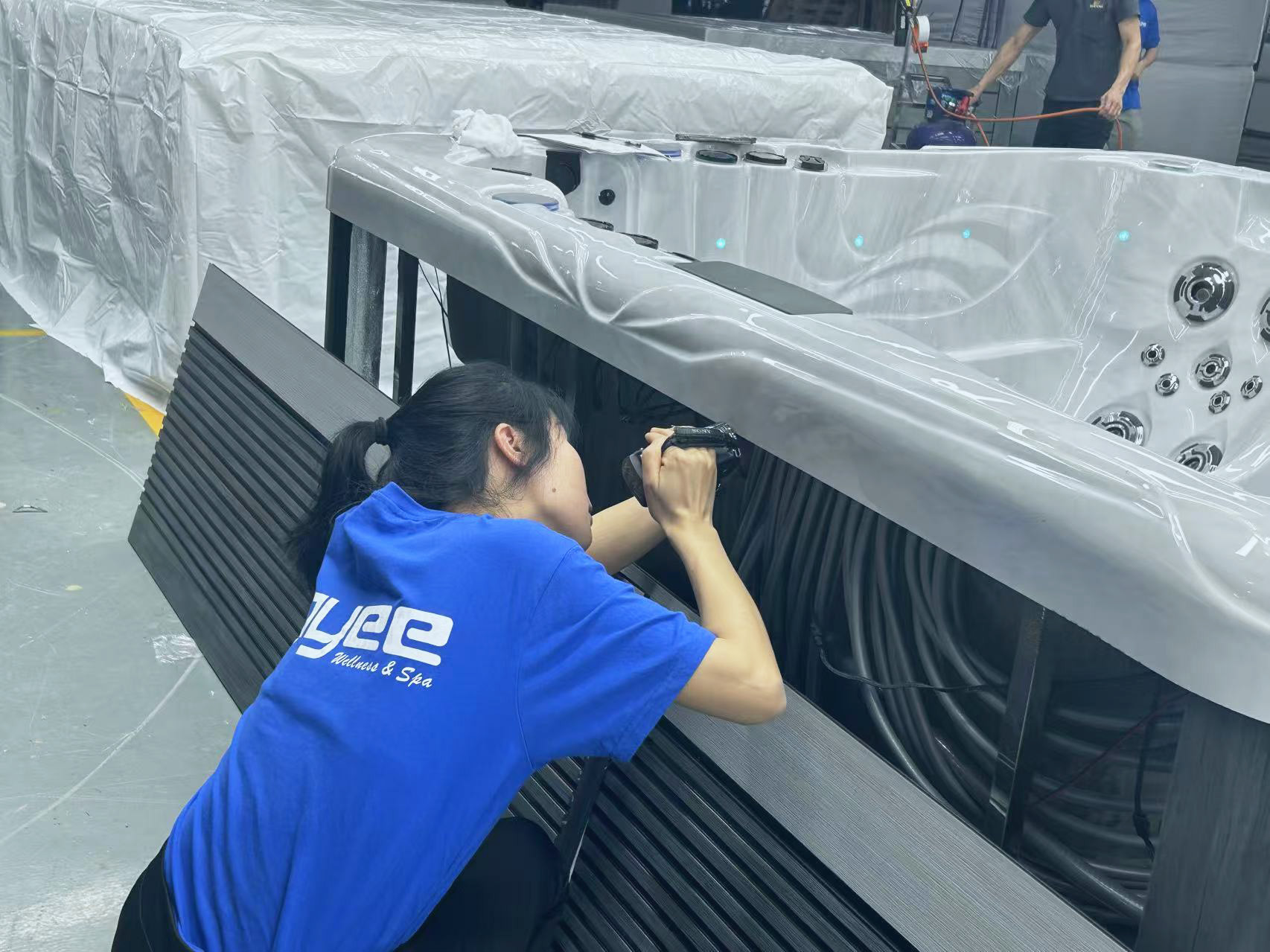
For buyers who may need replacement parts or long-term service, the supplier's manufacturing capability and after-sales support can be just as relevant as the initial product specification. Distributors and project buyers may also benefit from suppliers that can provide flexible configurations and hot tub OEM & ODM support when specific market or project requirements are involved.
For buyers looking for a combination of product flexibility and manufacturing support, JOYEE provides hot tub products and flexible manufacturing solutions for different residential, hospitality, and commercial applications. Its product range can be configured around different seating capacities, hydrotherapy requirements, and project needs, while OEM and ODM capabilities support customized product development, branding, and configuration. This makes JOYEE a relevant option to consider when moving from general product research to a more specific sourcing requirement.
Conclusion
Choosing the right hot tub is a combination of lifestyle planning, technical evaluation, and long-term cost assessment. Size and seating should reflect actual usage, while hydrotherapy performance needs to be considered through jet placement, water flow, pump configuration, and ergonomics. Features, energy efficiency, installation conditions, and supplier support also contribute to the overall value of a spa.
Ready to elevate your residential, hospitality, or commercial space? Contact JOYEE to discover premium hot tub products, and partner with us for flexible manufacturing and custom OEM & ODM solutions tailored to your exact project needs!
Frequently Asked Questions
What should I consider before buying a hot tub?
The main considerations include intended use, number of users, available space, seating configuration, hydrotherapy requirements, features, installation conditions, total ownership cost, and supplier support.
How do I choose the right hot tub size?
Start with the number of regular users, then consider seating layout, external dimensions, available installation space, and required clearance. A model's stated capacity should be assessed together with how comfortably users can occupy the available seats.
How much does a hot tub cost?
The total cost includes more than the purchase price. Delivery, installation, electrical work, energy consumption, water treatment, maintenance, and service can all contribute to the overall investment.
How much does it cost to run a hot tub?
Running costs depend on factors such as water temperature, frequency of use, climate, insulation, cover performance, pump efficiency, and electricity rates. Heating and circulation are generally important components of ongoing energy consumption.
What are the most important hot tub features?
Useful features depend on the intended application. Ergonomic seating, suitable jet configurations, efficient filtration, insulation, easy controls, water-care systems, and energy-efficient equipment can all contribute to the overall experience and operating convenience.
How many jets should a good hot tub have?
Jet quantity alone does not fully indicate hydrotherapy performance. Jet placement, jet types, pump capacity, water flow, plumbing design, and seating position all affect how the massage system performs.
What electrical requirements does a hot tub need?
Requirements vary by model and equipment configuration. Voltage, circuit capacity, wiring, and local electrical standards should be checked against the manufacturer's specifications and reviewed with a qualified electrical professional.
How long does a hot tub typically last?
Service life depends on construction quality, equipment, installation, usage frequency, water care, climate, and maintenance. Proper maintenance and timely replacement of serviceable components can support long-term performance.