
A hot tub that works well in a private backyard may not be the right choice for a luxury villa, hotel, resort, or wellness facility. Each application comes with different expectations for capacity, space, usage frequency, seating, hydrotherapy, and overall design. As the market offers an increasingly wide range of hot tub configurations, choosing by appearance or feature count alone can make product selection more complicated.
The first step is to identify the application and understand how the hot tub will actually be used. Residential buyers may focus on comfort, size, and design, while hospitality projects need to consider frequent use, guest experience, and maintenance. Distributors and wholesalers face another consideration: products need to offer enough design and configuration variety to create a distinctive market position. Current designs, continuous product updates, and customization capabilities can therefore become important selection criteria alongside technical specifications.
The right choice ultimately comes from matching the application, users, usage pattern, space, and product characteristics to the intended market and experience.
Match Hot Tub Types to Residential and Luxury Applications
Residential applications cover a broad range of needs, from compact spaces for couples to large outdoor areas designed for family entertainment. Capacity and layout should reflect how the spa will actually be used.
For Small Homes and Couples
When space is limited or the hot tub is primarily intended for one or two users, a compact configuration can provide a practical balance between comfort and footprint. Smaller models are also easier to integrate into patios, terraces, and other residential spaces where installation area is limited.
JOYEE offers compact configurations such as the Trieste, Seville, and Split, giving buyers options for smaller user groups and different spatial requirements. Product selection can then focus on seating arrangement, hydrotherapy features, and the overall installation environment.
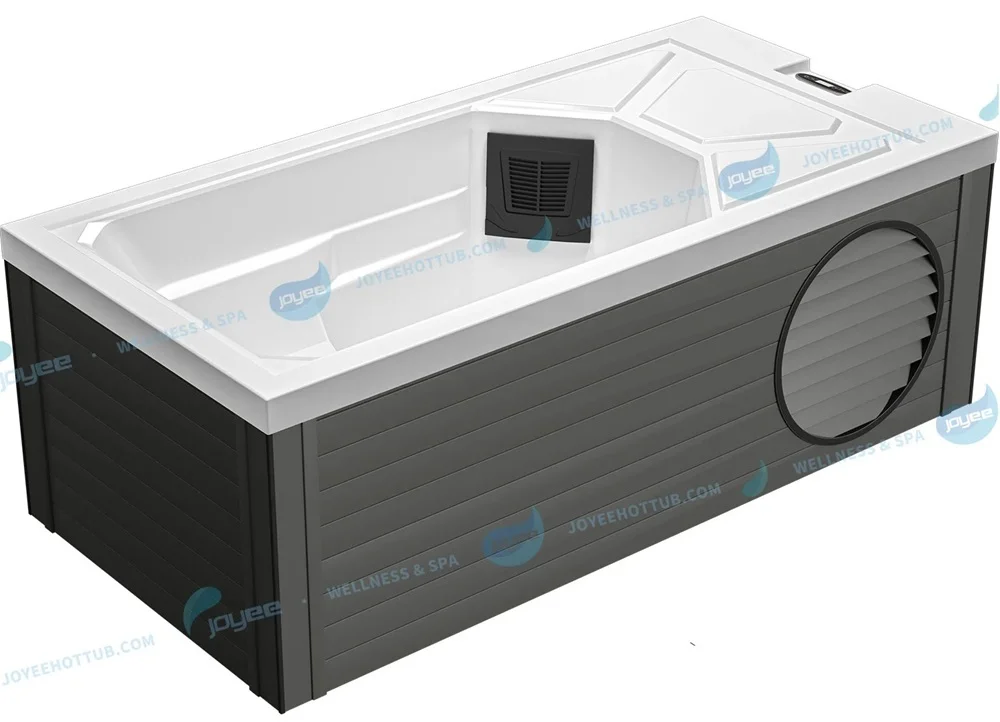
JOYEE Trieste Cold Plunge for recovery, relaxation, and everyday wellness
For Families and Social Use
Family-oriented applications generally require greater capacity and flexible seating. A five to eight-person configuration can provide more room for shared use, while the arrangement of seats and loungers affects how comfortably people interact within the spa.
JOYEE models such as California, Bremen, and Pisa demonstrate different capacity options for larger residential applications. The appropriate model depends on actual household use, available outdoor space, and the desired balance between social seating and individual relaxation.
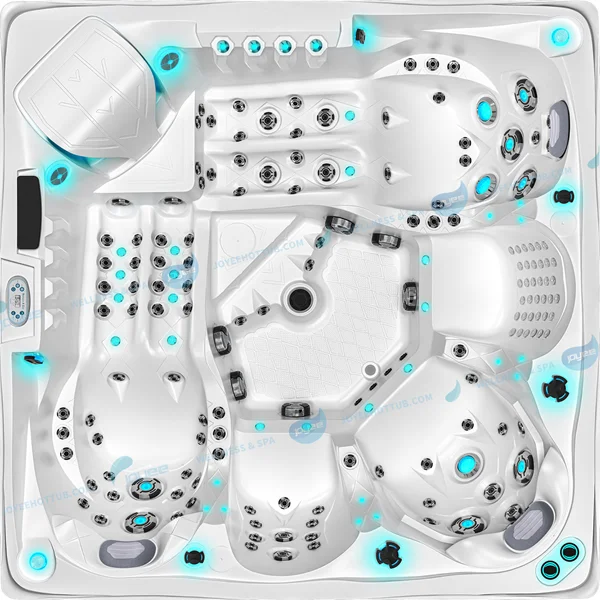
JOYEE California Outdoor Spa with the capacity of 5 persons
For Luxury Villas
Luxury residential projects place greater emphasis on visual design, spatial integration, and the overall bathing experience. A hot tub should complement the surrounding architecture and outdoor environment while supporting the level of experience expected from a premium property.
For these applications, JOYEE's Luxury SPA range provides a suitable product direction for buyers seeking a more distinctive and upscale spa experience.
Select Hot Tubs for Hospitality, Wellness and Commercial Use
Hotels, resorts, and wellness facilities introduce a different usage pattern. The equipment may serve a continuous flow of guests, making product configuration, operational practicality, and user experience important parts of the selection process.
For Hotels and Resorts
Hospitality applications often require hot tubs that can accommodate frequent guest use while fitting naturally into pool areas, outdoor leisure spaces, or dedicated spa facilities. Capacity, seating arrangement, water management, maintenance requirements, and overall appearance should be evaluated together.
JOYEE's Premium Spa and Luxury SPA ranges can provide product directions for hospitality environments where guest experience and product positioning are important considerations.
For Wellness and Therapy Applications
Wellness-focused projects place greater emphasis on hydrotherapy and the configuration of the spa itself. Jet placement, seating position, water flow, and the intended therapy experience all influence product selection.
For these applications, JOYEE's Overflow & Therapy SPA range offers a more specialized direction. The overflow design and therapy-oriented positioning can be considered when the project requires a dedicated wellness experience alongside the conventional functions of a hot tub.
Match Size and Features to the Intended Use
Once the application has been defined, capacity and features can be evaluated according to actual requirements. This prevents product selection from becoming a simple comparison of specifications.
Choose Capacity Based on Actual Users
Capacity should correspond to the typical number of users and the way they use the spa. A compact configuration can suit couples or small households, while five to eight-person models provide greater flexibility for families, hospitality spaces, and social settings.
Seating layout also deserves attention. Loungers can support individual relaxation, while open seating can make conversation and shared use easier. The physical dimensions of the hot tub should also be considered alongside access routes, installation space, and surrounding clearance.
Prioritize Features That Support the Application
Features should serve the intended experience. Jet configuration, seating, filtration, insulation, and water management are among the factors worth evaluating.
Jet quantity alone does not determine hydrotherapy quality. Placement, jet type, seating position, and the overall configuration work together to shape the experience. Similarly, filtration and water management become increasingly relevant in applications with frequent usage.
How Distributors Can Choose Hot Tubs That Stand Out
For distributors and wholesalers, product selection has a commercial dimension beyond capacity and specifications. A portfolio filled with similar products can make differentiation difficult and increase pressure on price.
Look Beyond Standard Product Configurations
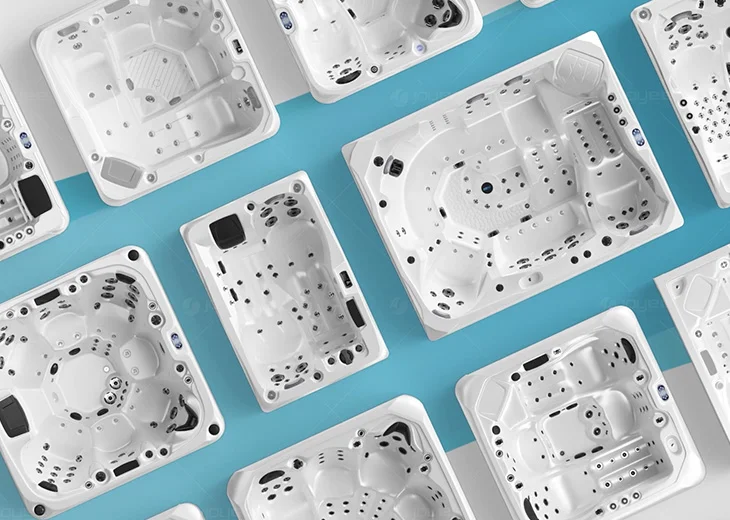
Following market trends and introducing fresh designs can give distributors more opportunities to refresh their product portfolios. Design, seating configuration, product positioning, and application-specific features can all contribute to a more distinctive offering.
JOYEE focuses on keeping product development aligned with industry trends while continuously introducing new styles. This gives distributors access to product concepts that can support different market positions and customer preferences.
Consider Customization for Different Markets
Market preferences vary across regions and customer groups. Customization allows distributors to adapt products to specific requirements and create offerings with a stronger individual identity.
JOYEE supports product customization, giving brand owners and distributors an opportunity to develop hot tubs around specific market positioning instead of relying exclusively on standard configurations.
Build a Differentiated Product Portfolio
A well-structured portfolio can address several market segments at the same time:
|
Market Position |
Product Direction |
|
Entry-level |
|
|
Mid-to-high-end |
|
|
Luxury |
|
|
Wellness and therapy |
Combining different product levels with continuous design development and customization can help distributors create a broader and more distinctive market offering.
Conclusion
The right hot tub selection begins with the application and develops through users, usage frequency, space, capacity, features, and product positioning. Residential buyers may prioritize comfort and design, while hospitality and wellness projects require closer attention to usage intensity and functional requirements.
For distributors and wholesalers, differentiation deserves equal consideration. Distinctive designs, continuous product development, and customization can support stronger market positioning and create opportunities beyond direct price competition.
JOYEE offers Economic, Premium, Luxury, and Overflow & Therapy SPA options, supported by product customization and ongoing product development for different market requirements.
Frequently Asked Questions
1. How do I choose the right hot tub for my application?
Start by identifying who will use the hot tub, how frequently it will be used, where it will be installed, and what experience it should provide. Then evaluate capacity, seating, features, and product configuration according to these requirements.
2. What type of hot tub is best for a small home?
A compact hot tub with a smaller footprint is usually more suitable for couples or small households. Models designed for two or three users can provide comfortable seating while making better use of limited patios, terraces, or outdoor spaces.
3. What type of hot tub is suitable for hotels and resorts?
Hotels and resorts should consider hot tubs designed around frequent use, guest experience, capacity, seating configuration, water management, and maintenance requirements. Premium or luxury configurations may also support the positioning and visual requirements of hospitality projects.
4. How many people should a hot tub accommodate?
Capacity should reflect the number of people who will typically use the spa. Smaller households may prefer two to three-person models, while families, social spaces, and hospitality applications may benefit from five to eight-person configurations.
5. Are more hot tub jets always better?
Jet quantity is only one factor in hydrotherapy performance. Jet placement, jet type, seating position, water flow, and the overall configuration determine how effectively the hot tub supports the intended experience.
6. How can distributors differentiate their hot tub products?
Distributors can build differentiation through distinctive designs, updated product styles, varied configurations, and market-specific customization. Working with a manufacturer that supports continuous product development can also help create a more distinctive product portfolio.
7. Can hot tubs be customized for different markets?
Yes. Customization can address differences in market preferences, product positioning, appearance, configuration, and application requirements. For distributors and spa brands, customized hot tubs can provide greater flexibility when developing products for specific customer segments or regional markets.