
A hotel may need a relaxing wellness amenity for guests, while a luxury villa could prioritize outdoor leisure, and a fitness or wellness facility may need space for regular aquatic exercise. Each setting calls for a different balance of functionality, space, and user experience. Hot tubs are generally built around relaxation, soaking, and hydrotherapy, while swim spas offer a larger environment for swimming, fitness, recovery, and wellness. Understanding where each product fits best can make project planning more efficient and help buyers select a solution that matches the intended use, installation conditions, and overall positioning.
The Fundamental Difference
A hot tub and a swim spa can both support relaxation and wellness, but they are designed around different primary uses. Understanding this distinction helps determine which product fits the purpose and layout of a specific project.
Hot Tub: Soaking, Relaxation & Hydrotherapy
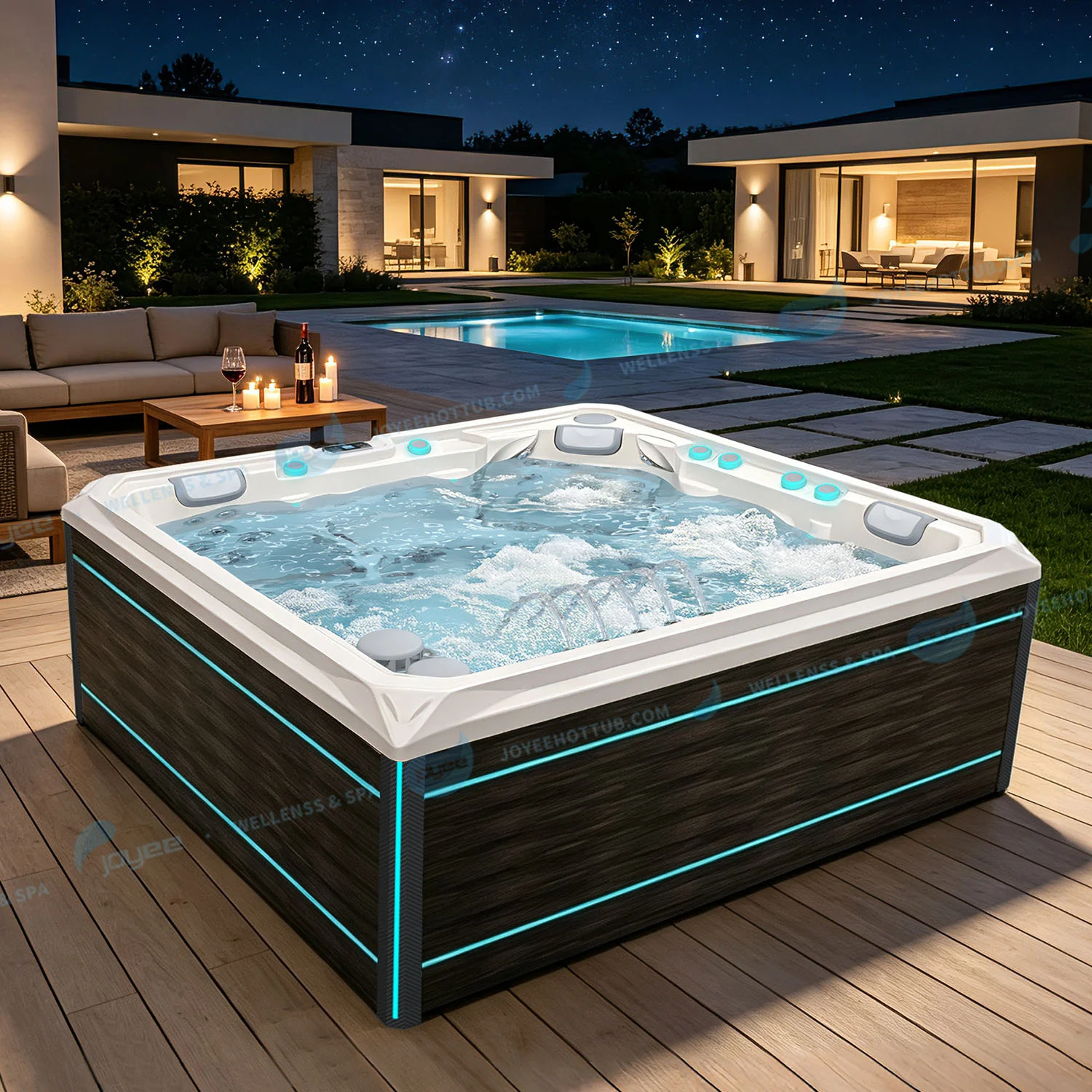
A hot tub is primarily designed for seated soaking, relaxation, and hydrotherapy. Its layout typically focuses on comfortable seating, strategically positioned jets, and an intimate environment for individual or group use. This makes hot tubs a natural fit for villas, hotels, resorts, and residential wellness spaces where relaxation is the main experience.
Their more compact footprint also provides flexibility in outdoor living areas such as terraces, patios, gardens, and poolside zones. For projects with limited available space, a hot tub can deliver a dedicated wellness feature without requiring a large activity area.
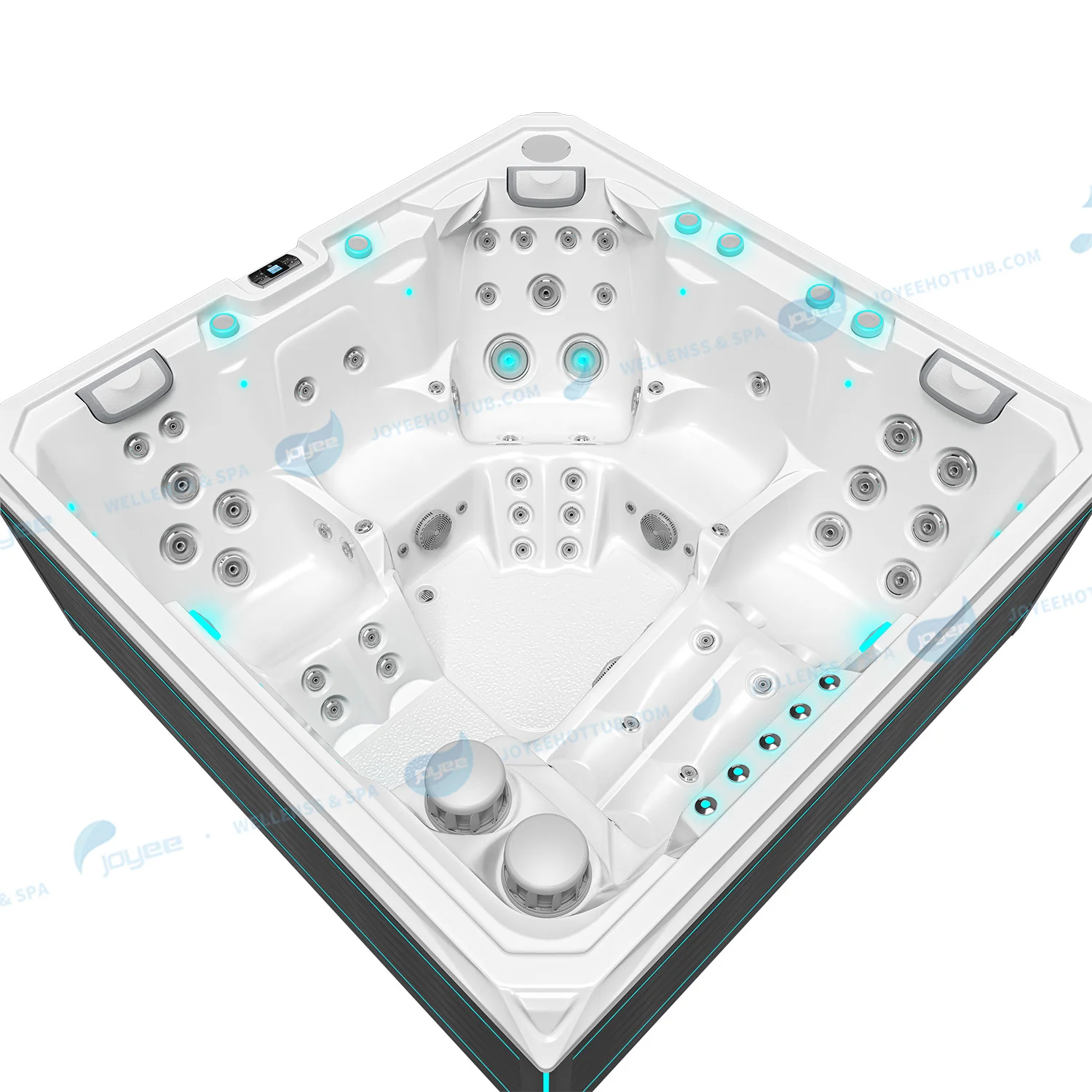
JOYEE Nazare hot tub featuring spacious capacity, powerful hydrotherapy, and modern design
Swim Spa: Swimming, Fitness & Wellness
A swim spa combines a larger water area with functions designed for swimming, aquatic exercise, recovery, and relaxation. Depending on the configuration, it may include a swim-current system, exercise area, hydrotherapy seating, or other wellness features.
This broader functionality makes swim spas suitable for projects where fitness and wellness are part of the intended user experience. They can serve luxury residences, fitness facilities, wellness centers, and resorts that want to provide several forms of aquatic activity within one installation.
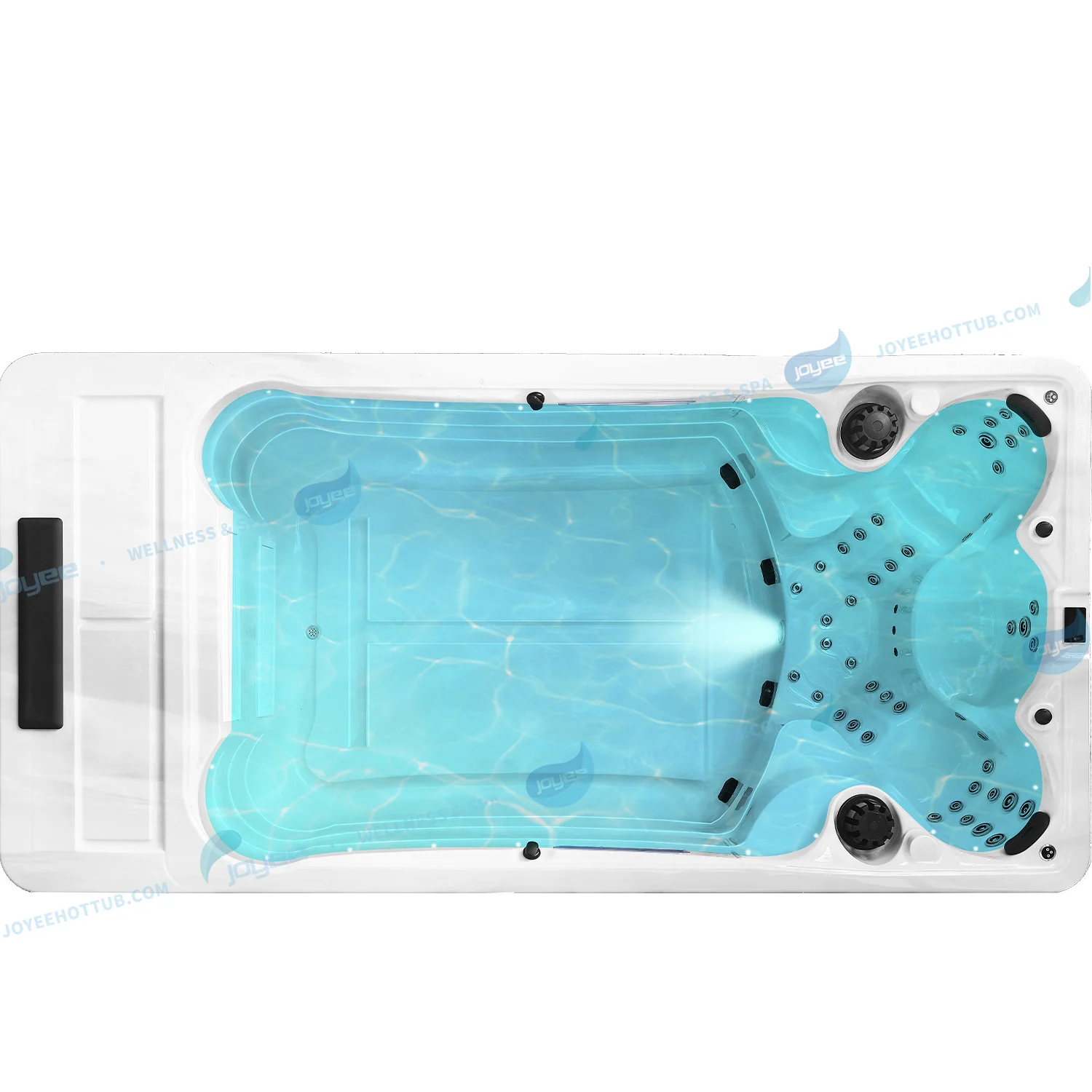
JOYEE Toronto-Plus swim spa pool combining a dedicated swim zone with integrated hydrotherapy
For project buyers, developers, and distributors, product selection therefore needs to reflect how the space will actually be used. The next step is to compare the two options across the factors that have the greatest impact on project planning.
Project Comparison at a Glance
The most useful comparison depends on how each product contributes to the project. The differences below offer a quick reference before looking at specific project applications.
|
Factor |
Hot Tub |
Swim Spa |
|
Primary use |
Relaxation & hydrotherapy |
Swimming, fitness & wellness |
|
Footprint |
More compact |
Larger |
|
Seating |
Main design focus |
Combined with activity area |
|
Swimming |
Not designed for swimming |
Designed for swimming and aquatic exercise |
|
Fitness |
Limited |
Strong |
|
Hydrotherapy |
Strong |
Available |
|
Installation planning |
Generally simpler |
Requires more planning |
|
Water volume |
Lower |
Higher |
|
Typical applications |
Villas, hotels, residential wellness |
Fitness, wellness, resorts, luxury residences |
Which Projects Are Better Suited to a Hot Tub?
Hot tubs tend to work well in projects where relaxation, hydrotherapy, and social use are central to the experience. Their compact format also makes them easier to incorporate into spaces designed primarily for living, hospitality, or leisure.
Residential & Luxury Villa Projects
For villas and high-end residences, hot tubs can complement gardens, patios, terraces, and pool areas without taking over the entire outdoor space. They can serve as a dedicated relaxation zone and contribute to a broader luxury outdoor living concept.
Hotels & Resorts
Hotels and resorts can use hot tubs in guest suites, poolside areas, private terraces, and wellness facilities. Their appeal lies in creating a focused relaxation experience that complements other amenities such as swimming pools, saunas, or massage facilities.
Compact Wellness Areas
Hot tubs are also practical where the available footprint is restricted. Urban residences, boutique hospitality properties, and smaller wellness areas may benefit from a product that provides hydrotherapy and relaxation within a relatively contained installation area.
Which Projects Are Better Suited to a Swim Spa?
Swim spas become more relevant when a project needs water-based exercise alongside relaxation and wellness. Their larger format supports a wider range of activities, making them suitable for developments where the spa is expected to serve multiple purposes throughout the day.
Fitness & Wellness Projects
Fitness clubs, wellness centers, and recovery-focused facilities can use swim spas for swimming practice, aquatic exercise, low-impact training, and post-workout recovery. The swim area provides functional value for active users, while hydrotherapy features can support relaxation after exercise. This combination can also help projects create a more comprehensive wellness offering within a defined area. For facilities where aquatic fitness forms part of the service portfolio, a swim spa can provide greater functional flexibility than a relaxation-focused spa.
Luxury Residential Projects
In larger luxury residences, a swim spa can become a multifunctional centerpiece for family wellness. Different users can enjoy swimming, exercise, hydrotherapy, or relaxation within the same installation. This makes the product particularly relevant to homeowners who want more than a conventional soaking experience. Available space remains an important consideration, especially for installations on terraces, decks, or within landscaped outdoor areas.
Resorts & Commercial Wellness Facilities
Resorts and commercial wellness facilities can use swim spas to expand their aquatic amenities beyond traditional pools and hot tubs. They can support fitness sessions, recovery programs, wellness experiences, and private-use areas, depending on the project's design.
7 Project Factors to Compare Before Choosing
Once the intended application is clear, several practical factors can help narrow the choice between a hot tub and a swim spa.
1. Project Objective
The primary purpose should guide the initial selection. Relaxation and hydrotherapy point toward a hot tub, while swimming, aquatic fitness, and multifunctional wellness create a stronger case for a swim spa.
2. Available Space
Product dimensions are only part of the calculation. The project may also need space for access, servicing, drainage, electrical connections, and delivery. A product's footprint should therefore be evaluated together with the complete installation area.
3. Target Users
The expected users influence both product type and configuration. A private villa, hotel guest area, fitness center, and commercial wellness facility can have very different requirements for capacity, functionality, and frequency of use.
4. Installation Conditions
Indoor and outdoor installations may involve different structural, ventilation, drainage, electrical, and access considerations. Built-in or deck installations can also require additional coordination during the design stage.
5. Budget & Total Cost of Ownership
The initial purchase price provides only part of the financial picture. Installation, energy consumption, water capacity, maintenance, and expected service requirements can all affect the project's long-term cost.
6. Usage Frequency
Occasional guest use and daily commercial operation place different demands on a product. Expected operating frequency can help determine the appropriate configuration, durability requirements, and maintenance planning.
7. Product Positioning
For distributors, developers, and hospitality operators, the product should also support the project's market positioning. Premium wellness, family leisure, fitness, recovery, and luxury outdoor living can each call for a different product strategy.
A Practical Project Selection Checklist
The final choice can be viewed as a project-fit decision. A hot tub may align well with a relaxation-led application where space efficiency and hydrotherapy are priorities. A swim spa can offer broader functionality when swimming, fitness, recovery, and wellness need to be incorporated into the same space.
A practical checklist can help clarify the direction:
A hot tub may be a suitable choice when:
- Relaxation and hydrotherapy are the primary objectives
- The available installation area is relatively compact
- Comfortable seating is central to the intended experience
- The project focuses on leisure, guest comfort, or outdoor living
A swim spa may be a suitable choice when:
- Swimming or aquatic fitness is part of the intended use
- Several wellness functions need to be combined
- Sufficient space is available for the larger installation
- Fitness, recovery, or multifunctional wellness contributes to the project concept
The decision can also involve commercial considerations. For distributors and project developers, the product should fit the target market, expected demand, and overall portfolio strategy. Reviewing these factors together provides a more practical basis for product selection than comparing specifications alone.
Why Choose JOYEE for Your Hot Tub or Swim Spa Project?
As a professional hot tub manufacturer and spa supplier located in Foshan, China, JOYEE provides hot tub and swim spa solutions for residential, hospitality, commercial, and distribution projects. Its product range allows buyers to consider different solutions according to the project's intended use, available space, user requirements, and market positioning. Manufacturing capabilities, product consistency, and project experience also provide a foundation for handling bulk and commercial requirements.
For distributors, developers, hospitality operators, and project buyers, customization and project support can be important throughout the sourcing process. Different markets may require specific configurations, finishes, functions, dimensions, or compliance standards. JOYEE supports OEM and ODM projects, helping businesses develop spa products that align with their brand requirements and target applications. Technical specifications and project information can also support more accurate product selection during the planning stage.
If you are planning a villa, hotel, resort, wellness, fitness, or commercial spa project, JOYEE can help evaluate the application and identify suitable hot tub or swim spa options. Contact us to explore a suitable hot tub or swim spa solution for your next project.
Frequently Asked Question
Is a swim spa better than a hot tub?
Neither option is universally better. A hot tub is generally more focused on soaking and hydrotherapy, while a swim spa provides additional space and functionality for swimming, fitness, and wellness. The appropriate choice depends on the project's intended use and installation conditions.
Can a swim spa replace a hot tub?
A swim spa can provide hydrotherapy and relaxation functions in addition to swimming and exercise. Whether it can replace a hot tub depends on the project's priorities, available space, and the specific configuration required.
Which requires more installation space, a hot tub or swim spa?
A swim spa generally requires more space because of its larger water area. The overall installation footprint should also account for access, equipment servicing, drainage, utilities, and delivery.
Which has higher operating costs, a hot tub or swim spa?
Operating costs depend on factors such as water volume, heating efficiency, usage frequency, climate, maintenance, and equipment configuration. A larger swim spa may involve greater energy and water requirements, making the complete operating profile important when evaluating a project.
What should I prepare before requesting a hot tub or swim spa quotation?
Project type, installation location, available dimensions, expected users, required functions, quantity, preferred configuration, certification requirements, destination, and project schedule are useful starting points. Site plans or installation drawings can provide additional information for technical evaluation.