
Energy costs remain a practical concern for anyone considering an outdoor spa. A well-designed unit keeps water at the preferred temperature with less frequent heating cycles, which translates into lower monthly bills and quieter operation. Buyers searching for the best energy efficient hot tub usually want clear brand recommendations alongside criteria that help match a spa to climate, usage patterns, and installation setting.
This guide reviews leading brands recognized for strong thermal performance. It also outlines the design elements that influence real-world efficiency so readers can evaluate options with greater confidence. Throughout, attention turns to practical features such as full-foam insulation, low-energy circulation pumps, insulated covers, and heat-pump readiness.
Top Energy Efficient Hot Tubs Reviewed
The brands below represent different market positions and engineering approaches. Each applies insulation strategies and component choices that support lower standby energy use across their product lines.
Hot Spring
Hot Spring focuses on a comprehensive Energy Smart system built around multiple layers of high-density polyurethane foam that fully surround the shell. An insulated polymer base pan creates an air barrier against ground cold, while proprietary custom-fit covers with hinge seals limit surface heat loss. A dedicated SilentFlo circulation pump moves water continuously for filtration while drawing less power than a typical 40-watt light bulb. The combination of dense foam insulation, heat-capturing pump shrouds, and titanium heaters helps many Hot Spring models meet or exceed California Energy Commission and APSP 14 standards, making the brand a frequent reference point for colder climates where consistent heat retention is essential.
Jacuzzi
Jacuzzi emphasizes dual-layer insulation packages and SmartSeal construction designed to lock in heat across a range of climates. Many models support the SmartTub connectivity platform, which includes Smart Heat Mode. This feature learns usage patterns and can reduce standby heating costs by automatically adjusting temperature setpoints during off-peak hours or periods of low activity. Heat-pump-ready interfaces further expand efficiency options, allowing owners to pair the spa with an external heat pump for year-round comfort at lower energy intensity. The overall approach balances thermal retention with remote monitoring that gives clearer visibility into daily energy consumption.
Sundance Spas
Sundance Spas applies full-foam insulation as a core design principle across its higher series, with an optional EcoWrap layer available for installations in extreme cold. RigidBond multi-layer shell construction contributes to both structural rigidity and thermal stability. Well-fitted insulated covers and efficient circulation systems work together to maintain water temperature with reduced reheating cycles. SmartTub connectivity on selected models adds remote energy monitoring and scheduling tools, giving owners practical data on operating costs while supporting consistent performance through seasonal temperature swings.
Bullfrog Spas
Bullfrog Spas builds efficiency around its JetPak Therapy System, which significantly reduces the volume of internal plumbing compared with conventional jet layouts. Less plumbing means lower friction losses and reduced energy demand from the pumps. Full-foam insulation fills the cabinet cavity to limit conductive and convective heat escape, while a high-quality insulated cover seals the water surface. Dedicated low-energy circulation options further improve filtration efficiency. The brand’s models consistently meet or exceed California Energy Commission guidelines, reflecting a design philosophy that prioritizes both customizable hydrotherapy and measurable reductions in operating energy.
JOYEE
JOYEE approaches energy efficiency through its proprietary Scandinavian Thermal System, a multi-layer insulation architecture developed for demanding outdoor conditions. The system combines continuous full-foam coverage of the shell (typically 18–20 mm), an insulated ABS base with heat-reflecting foil to block ground cold, thickened PEF foam and thermal foil on the cabinet walls, and an extra-thick 10–15 cm insulated cover with a tight seal. Field comparisons indicate standby power reductions of several kilowatt-hours per day relative to conventional construction, with annual electricity savings that can reach several hundred euros depending on climate and usage. A dedicated heat-pump pre-install interface supports external air-source units that can cut heating energy by up to 70 percent under suitable conditions. As a practical example, the compact Bodrum spa applies this thermal package in a space-efficient two-person footprint while retaining the same insulation and control standards used across the broader product range.
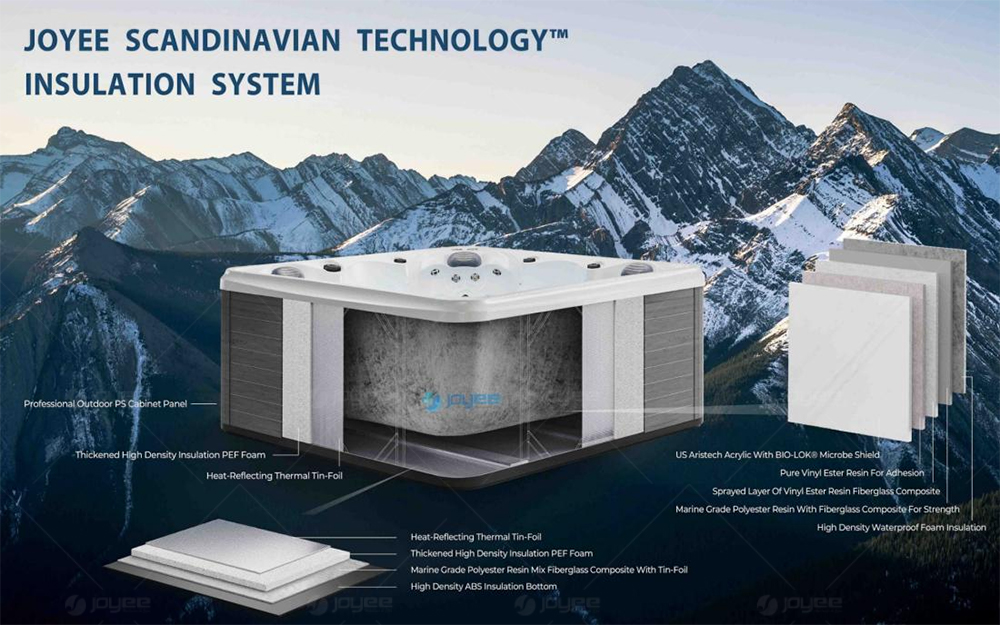
JOYEE Scandinavian Thermal System multi-layer insulation architecture
Master Spas
Master Spas relies on full-foam insulation paired with a precisely fitted cover to maintain water temperature and limit reheating demand. Energy-efficient materials and construction practices keep standby losses low, while mineral-based filtration systems such as EcoPur help reduce chemical load and the associated pump runtime required for water care. The overall package emphasizes straightforward thermal design that delivers predictable operating costs in moderate to cold climates without relying on complex secondary systems.
How to Choose the Right Energy Efficient Hot Tub
Selecting among energy-efficient options benefits from a short checklist that aligns technical features with actual living conditions.
Insulation Depth and Coverage
Full-foam insulation that fills the cavity between shell and cabinet remains the most reliable barrier against heat loss. Look for continuous coverage without large air pockets, an insulated base that reduces ground conduction, and reflective layers that return radiant heat inward. JOYEE’s approach, detailed in its energy efficient hot tub technologies overview, illustrates how multi-layer construction can cut heat loss by 30 percent or more compared with basic foam packages.
Circulation and Pump Strategy
A dedicated low-wattage circulation pump that runs continuously for filtration consumes far less energy than cycling a larger jet pump. Quiet operation also improves the ownership experience. When evaluating options, confirm whether filtration occurs independently of hydrotherapy cycles so that daily water care does not trigger high-power equipment.
Cover Quality and Fit
An insulated cover with a tight hinge seal and tapered core prevents the largest single source of overnight heat escape. Covers rated for the local climate and sized precisely to the shell deliver measurable savings over generic alternatives.
Climate and Usage Patterns
Owners in cold regions gain the most from premium insulation and optional heat-pump interfaces. Households that soak several times per week benefit from smart scheduling features that lower setpoints during extended absences. Commercial or multi-unit installations may prioritize systems that support centralized monitoring and consistent thermal performance across seasons.
Certifications and Long-Term Value
Compliance with CEC or equivalent regional standards provides an independent benchmark. Beyond the purchase price, total cost of ownership includes energy, water care, and component longevity. Manufacturers that offer OEM customization options can align insulation thickness, control systems, and branding with specific market requirements, giving distributors and project buyers greater flexibility.
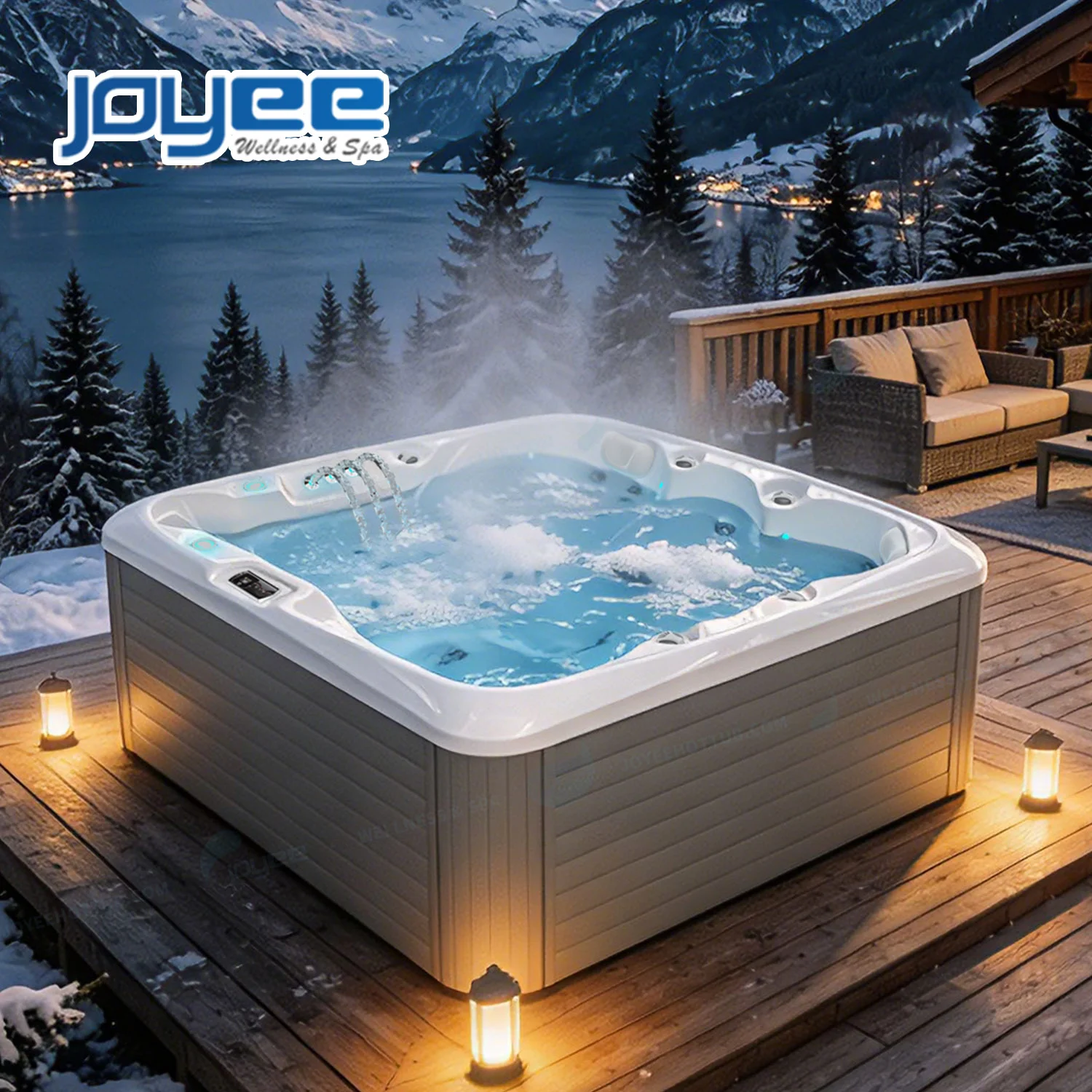
JOYEE outdoor spa configured for efficient thermal performance
Conclusion
The best energy efficient hot tub balances proven insulation, efficient circulation, a quality cover, and features that match local climate and how the spa will actually be used. Brands such as Hot Spring, Jacuzzi, Sundance Spas, Bullfrog Spas, JOYEE, and Master Spas each demonstrate distinct engineering approaches to the shared goal of lower energy demand without sacrificing comfort.
For buyers and project partners who value both performance and manufacturing flexibility, JOYEE stands out as a specialized OEM and ODM producer. Its Scandinavian Thermal System, heat-pump-ready interfaces, and full customization capability support residential, hospitality, and private-label applications across diverse markets. Exploring the complete range of JOYEE outdoor spas and technology solutions provides a practical next step for anyone ready to specify an energy-conscious spa that meets both performance targets and project requirements.